 (+035) 527-1710-70
 NEWSLETTER

Blog
How to Choose the Best Wine Fridge in Singapore
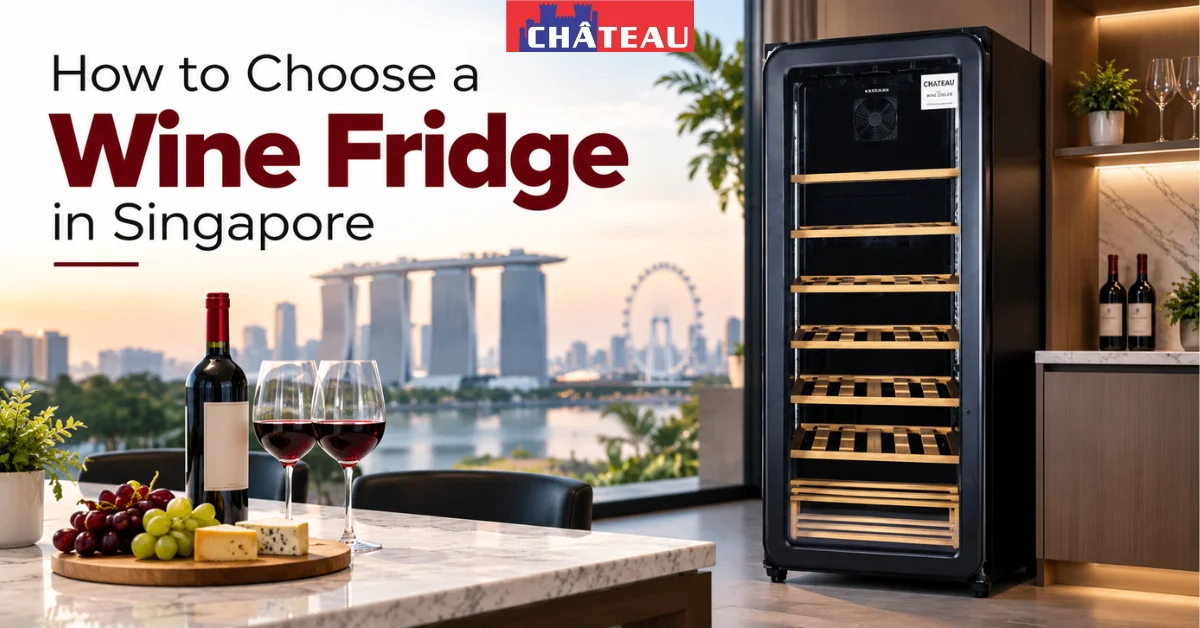
Once you have decided that your wine deserves proper storage, the next question is harder: which unit should you buy? Shops and websites list dozens of models with similar-looking glass doors and very different specifications. Some are ideal for a handful of weekend bottles, while others are built to age a serious collection for a decade.
If you are comparing Wine Fridge Singapore options for the first time, this guide walks through the decisions in the order that matters most. By the end, you should be able to narrow a long list down to two or three units that genuinely fit your home, your drinking habits and your budget.
Start With Capacity: How Many Bottles Do You Really Need?
Capacity is the decision most buyers get wrong, and almost always in the same direction: they buy too small. Collections tend to grow once wine has a proper home. A practical rule is to count the bottles you own today, estimate what you will hold in two years, and then add about 25% for flexibility.
Keep in mind that advertised capacity is usually based on standard 750ml Bordeaux-shaped bottles. Wider Burgundy bottles, Champagne and magnums take up more room, so a mixed collection will fit noticeably fewer bottles than the label suggests.
Small Units (Up to About 35 Bottles)
A small wine fridge Singapore model suits couples, casual drinkers and apartments with limited floor space. These units slot beside a kitchen counter, under a bar top or into a dining-room corner. They are ideal for keeping everyday bottles and a few special ones at the right temperature.
A Small Wine Fridge is also a sensible first purchase if you are not yet sure how much your collection will grow, because it lets you learn how you actually use cold storage before committing to something larger.
Medium Units (About 40 to 100 Bottles)
For many Singapore homes, the medium wine chiller is the sweet spot. It holds enough for regular entertaining and a growing collection without dominating the room. Medium units work well in dining areas, home bars, offices and lounges, and many offer dual-zone cooling.
Large Units (100 Bottles and Above)
Serious collectors, frequent hosts and hospitality businesses usually need a large wine chiller Singapore model. These tall cabinets are built for long-term storage, with more shelving, stronger insulation and more stable internal conditions. At the top end, a full-height unit effectively becomes a Wine Cellar Singapore solution for homes that do not have space for a traditional underground cellar.
Single Zone or Dual Zone: Which Do You Need?
A single-zone unit keeps the entire cabinet at one temperature. It is the right choice if you mainly drink one style of wine, or if you use the fridge purely for long-term storage at 12°C to 14°C.
A dual-zone unit has two separately controlled compartments. You might keep whites and sparkling wine cold in one section and reds slightly warmer in the other. For example, Chateau’s Zenith dual-zone model offers an upper zone adjustable from 5°C to 12°C and a lower zone adjustable from 12°C to 20°C, so bottles for tonight and bottles for next year can live in the same cabinet.
As a quick guide, choose single zone for simplicity and ageing, and choose dual zone if you entertain often or drink both reds and whites regularly.
Built-In or Freestanding?
This choice depends on where the unit will live.
- Built-in (front-venting) units release heat through a grille at the front, so they can be installed flush within kitchen cabinetry or an island. They look seamless and save space, but they must be planned into the carpentry.
- Freestanding units vent heat from the back or sides and need clearance around them. They are easy to install, simple to move and can be placed almost anywhere with a power point and a level floor.
Never install a freestanding model inside tight cabinetry. Without airflow, it will overheat, work harder and wear out sooner.
Why Compressor Cooling Matters in Singapore
Thermoelectric cooling struggles when the room itself is warm, because it can only cool by a limited margin below the ambient temperature. In our climate, that limitation shows up quickly, especially in rooms without constant air conditioning. Compressor cooling holds its set point even on hot afternoons, which is why it is the safer choice for almost every local home.
Features That Separate a Good Unit From an Average One
Once you have settled size, zones and installation, these details make the biggest difference in daily use:
- UV-protected glass: Double-layer or coated glass shields wine from light while keeping your collection on display. Low-E coatings add insulation by reducing heat transfer through the door.
- Anti-condensation glass: In humid rooms, ordinary glass can fog up. Heated glass doors, such as those on Chateau’s Allure series, help keep the view clear.
- Wooden shelves: Beech or similar wood absorbs vibration, protects labels and stops bottles from rolling. Sliding shelves make it easier to reach the back row.
- Precise digital control: A clear display with 1°C adjustments lets you fine-tune each zone.
- Soft LED lighting: LEDs produce very little heat, so they light up the collection without warming it.
- Door lock: Useful in homes with children or in shared spaces such as offices.
- Low vibration: Look for cushioned compressor mounts and a stable cabinet frame.
When you compare any Wine Cooler Singapore listing, check that these features are actually present rather than simply implied by the photographs.
How Much Does a Wine Fridge Cost in Singapore?
Prices vary with capacity, cooling type, zones and build quality, but the market broadly falls into three bands:
- Entry level: Small units generally start from around S$300 and suit basic storage for a few bottles.
- Mid range: Better-built small and medium compressor units, often with dual zones and UV glass, typically sit between several hundred and a couple of thousand dollars.
- Premium: Large, cellar-grade cabinets with advanced insulation and humidity management commonly exceed S$3,000, and specialist European cabinets can cost considerably more.
Running costs are modest. A well-insulated compressor unit uses relatively little electricity because it only needs to maintain a stable temperature inside a sealed cabinet. Prices also change with promotions and retailer, so always compare the specifications, warranty and after-sales support, not just the headline number.
Which Wine Fridge Brand Is the Most Reliable?
Reliability comes down to a few measurable factors rather than the logo on the door:
- Local service and spare parts: Can you get a technician and replacement parts in Singapore quickly?
- Warranty terms: How long is the coverage, and does it include the compressor?
- Track record: How long has the brand been serving local customers?
- Build quality: Look at the door seal, hinges, shelving and insulation, not just the finish.
The Best Wine Fridge for you is the one that ticks these boxes and matches your capacity and zone needs. That is why many buyers searching for the best wine fridge Singapore shortlist brands with a local showroom and service team. Chateau Wine Coolers has served Singapore since 2006, with a showroom at 15 Kian Teck Crescent, dedicated sales and service lines, and a range that runs from compact 30-bottle units to 171-bottle cabinets.
The same checklist applies if you are looking for the Best Wine Chiller Singapore for entertaining. Prioritise dual zones, reliable compressor cooling and easy access to bottles over purely decorative features.
Common Wine Fridge Problems and How to Avoid Them
Most issues come from installation rather than the appliance itself:
- Not reaching the set temperature: Usually caused by blocked ventilation, direct sunlight or a thermoelectric unit in a hot room.
- Condensation on the glass: Common in humid spaces; heated or double-glazed doors reduce it.
- Excess noise or vibration: Often due to an uneven floor or the unit touching a wall or cabinet.
- Worn door seals: Clean the gasket regularly and check that the door closes firmly all the way around.
Choosing a Wine Chiller Singapore model with front ventilation for built-in spaces, and leaving proper clearance for freestanding units, prevents most of these problems before they start.
A Quick Buying Checklist
- Count your bottles and add around 25% for growth.
- Decide between single zone and dual zone.
- Confirm whether the unit will be built in or freestanding.
- Choose compressor cooling for Singapore conditions.
- Check for UV-protected glass, wooden shelves and low vibration.
- Compare warranty length, local service and spare parts availability.
- Measure your space, including door swing and ventilation clearance.
Frequently Asked Questions
What is the best wine fridge in Singapore?
The best choice is a compressor-cooled unit sized for your collection plus room to grow, with UV-protected glass, low vibration and reliable local after-sales service.
Which brand of wine fridge is the most reliable?
Look for brands with a long local track record, clear warranty terms, a Singapore service team and available spare parts. These matter more than design alone.
How much does a wine fridge cost in Singapore?
Small entry-level units start from around S300,mid-rangemodelstypicallycostseveralhundredtoacoupleofthousanddollars,andlargecellar-gradecabinetsoftenexceedS3,000.
Should I choose a single zone or dual zone wine fridge?
Choose single zone if you mainly store one style of wine or want long-term ageing. Choose dual zone if you drink both reds and whites or entertain often.
What size wine fridge should I buy?
Estimate how many bottles you will own in two years and add about 25%. Remember that wider bottles such as Champagne reduce the real capacity.
What should I look for when buying a wine fridge?
Focus on compressor cooling, the right capacity, the number of zones, UV-protected glass, wooden shelving, low vibration, correct ventilation for your space and strong after-sales support.